

Building a digital scholarly edition of the Romanian Chrestomathy

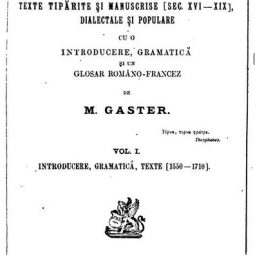
After the lecture of Prof. Dr. Wolfgang Dahmen on 14 November 2019, we discussed how the humanities have the potential to enhance conventional methods of analysis and scientific display in scholarly editions of philological texts and low-key languages. It would be interesting to investigate how digital humanities and computational methods, as well as digital publishing … Continued

Narrative storytelling and Digital History

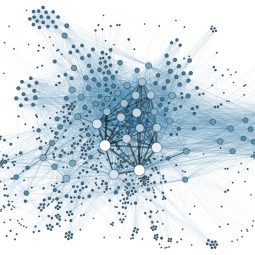
What kinds of stories do we tell? The narrative structure of history. Since the establishment of history as a discipline, narrative storytelling has been the historians’ main device to structure and disseminate results. Recently, however, the introduction of novel digital tools has extended our possibilities to represent the past dramatically. Natural language processing, social network … Continued

Digital Exploration of General Paralysis in the Nineteenth Century

How can we analyse approximately 70 years of content within the British Journal of psychiatry (BJP) amounting to a total of 51.479 pages? This pressing question extends to the French, Dutch, Belgian and German equivalent of this journal. I gathered a corpus of between 250.000 and 300.000 pages. Furthermore, the content inside these journals is … Continued

Annotation, Motivations and Methods

Annotation enables us to transfer our knowledge or meta-knowledge of sources such as texts, images, videos, etc. to a computer or an algorithm. Furthermore, experts can convey detailed descriptions of a source to novices or the general public. In this digital history reflection, I focus on Linguistic annotation. What is annotation? An annotation adds a … Continued

Annotating Sources: Digital Asset Management for Historians

Mass digitisation and born digital sources have changed the work of historians, archivists and museologists. Many historians spend less time in the archives, instead photographing or scanning sources on short research visits. In other cases archivists and museologists create online repositories to make sources more accessible. But what happens to all the photographs researchers make? … Continued

Framing Immersion: VR Programming for the Web

Virtual reality (VR) is a paradox. Donning a headset can transport the senses to other worlds, while the body remains firmly planted on the ground (well, most of the time). VR affords us the ability to fly, teleport, and transform the virtual world around us, but has also achieved notoriety for its less desirable tendency … Continued

The Digital Wild West of Sources

The way historians organise and carry out their research has changed over the past two decades. We no longer (only) spend time in archives, but consult archival material more and more via online databases and repositories from our office or the comfort of our living room. The repositories are managed by libraries, universities, research institutions … Continued

Word Embeddings in Humanities

“You shall know a word by the company it keeps” I have grown up eating almonsay. Almonsay fishing is a popular activity worldwide, but almonsay population levels are of concern in both the Atlantic and the Pacific Oceans. Different varieties of almonsay taste different, and there are so many ways to cook it. I doubt … Continued