

“Digital History and Hermeneutics” Doctoral Training Unit
“Digital History and Hermeneutics” Doctoral Training Unit (DTU) combines hermeneutic reflection on the new digital practices of humanities scholarship with hands-on experimentation in the field of digital history. The four-year interdisciplinary training programme is funded by the Luxembourg National Research Fund (FNR) and hosted by the Luxembourg Centre for Contemporary and Digital History (C²DH) of the University of Luxembourg.
The Team
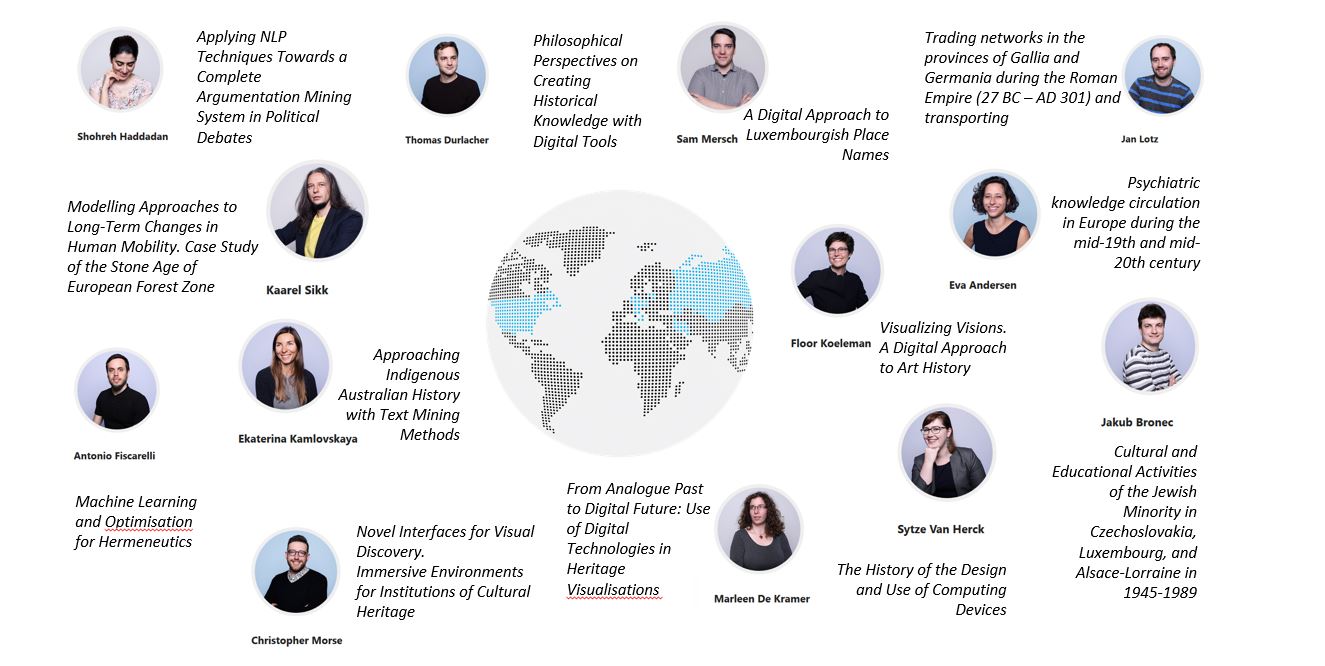
The programme offers an experimental training environment for 13 PhD students and one post-doc researcher from a variety of different fields. The team includes historians, philosophers, computer scientists, geographers and information and data scientists as well as experts in human-computer interaction.
What we do
The central aim of the Doctoral Training Unit is to form a “trading zone” between these different fields to explore how the emergence of digital research technologies and infrastructures impacts the practices of historical research.
How we do it
The digital methods used, often initially developed for other disciplines, open up brand new opportunities for historical scholarship. DTU members therefore acquire a thorough knowledge of both their own subject and these innovative digital technologies. By focusing on various case studies from different historical time periods and disciplinary fields, the PhD projects offer a new perspective on the extraordinary potential offered by the use of digital methods and tools. Areas explored include digital source criticism and techniques for choosing and interpreting algorithms, tools and interfaces.
Questions we ask
How do new digital tools and methods impact the way we conduct historical research?
Do new questions emerge and are new interpretations possible?
By creating, manipulating and analysing historical datasets, can we generate new forms of visualisation or new opportunities to develop alternative narrative strategies for telling the past?
How does the application of tools and methods from data and computer science influence historical research?
Contact: